What’s in this lesson: LLD basics, coupling vs cohesion, SOLID, UML thinking, and a short scored check.
Why this matters: Strong LLD helps you design code that is simpler to extend, debug, and explain in interviews.
Why this matters: Strong LLD helps you design code that is simpler to extend, debug, and explain in interviews.
Attention Activity
What changes when one module changes?
Imagine an order system where payment rules change. Tap through the design and notice which pieces should stay isolated.
Change one thingWatch impactSpot boundaries
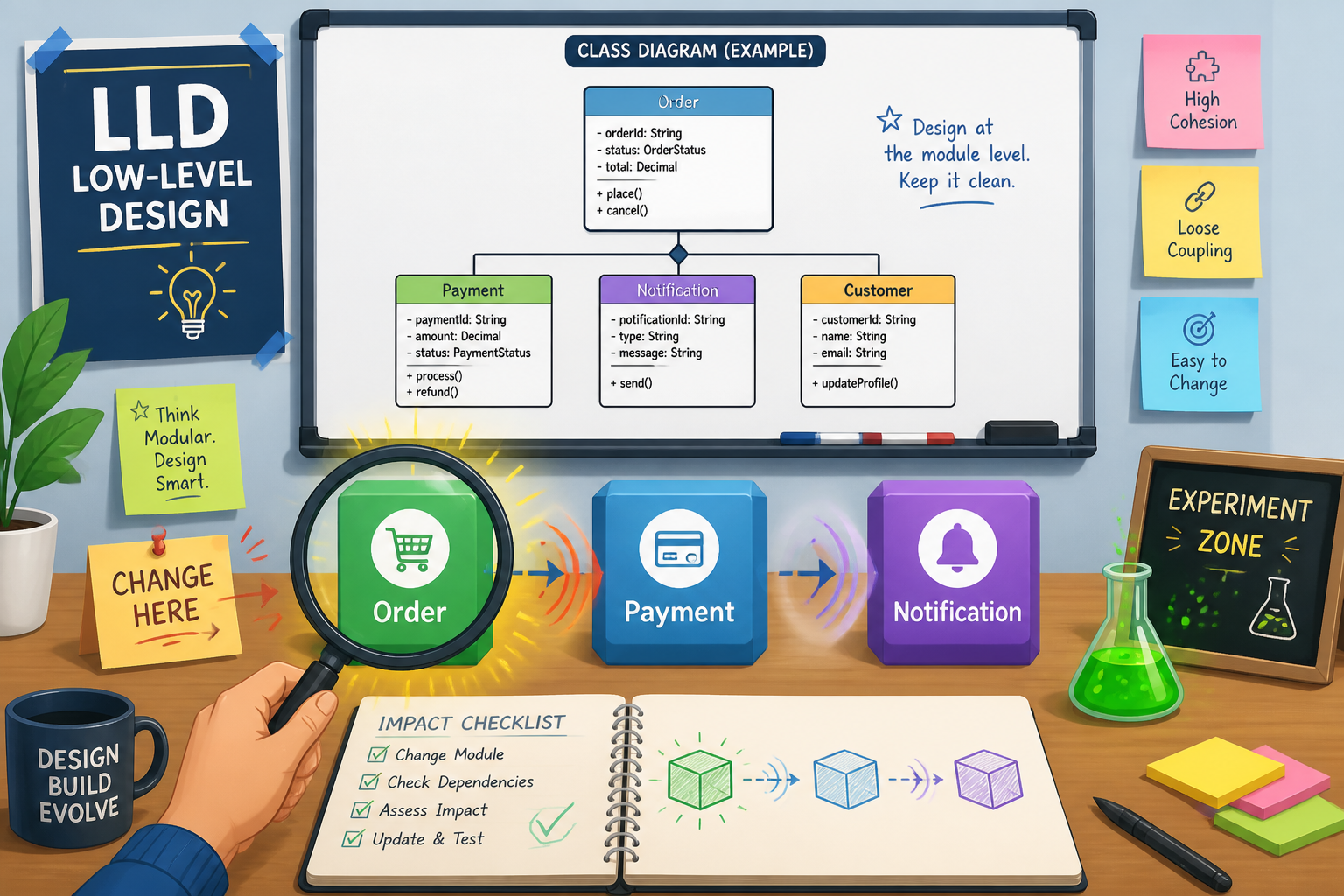
Hook: one small change can ripple through a design.
Core idea
LLD turns requirements into classes and responsibilities
Start by identifying nouns, actions, and rules. Then group related behavior into focused classes.
- Class: what data and behavior belong together?
- Responsibility: who owns each rule?
- Relationship: who uses, contains, or extends whom?
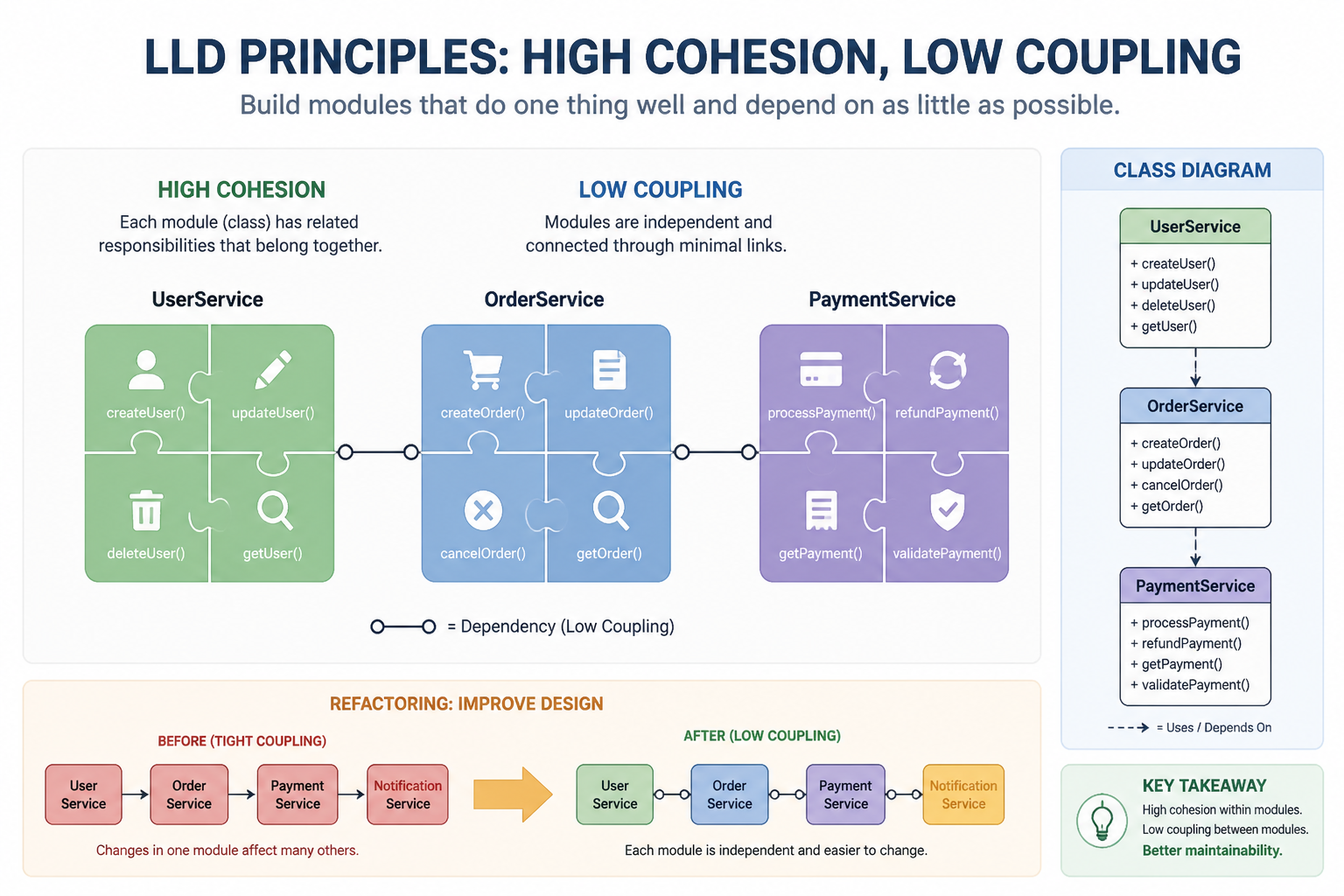
Good LLD keeps pieces grouped by purpose and loosely connected.
Design rule
Prefer high cohesion and low coupling
High cohesion means a class does one related job well.
Low coupling means classes depend on each other as little as possible.
If a change forces many files to change, your design is probably too tightly coupled.
Design choices work best when they support clear ownership and fewer dependencies.
Modeling
Use UML sketches to communicate design
Class diagrams help you show classes, attributes, operations, and relationships before coding.
- List major classes.
- Draw relationships.
- Check for missing responsibilities.
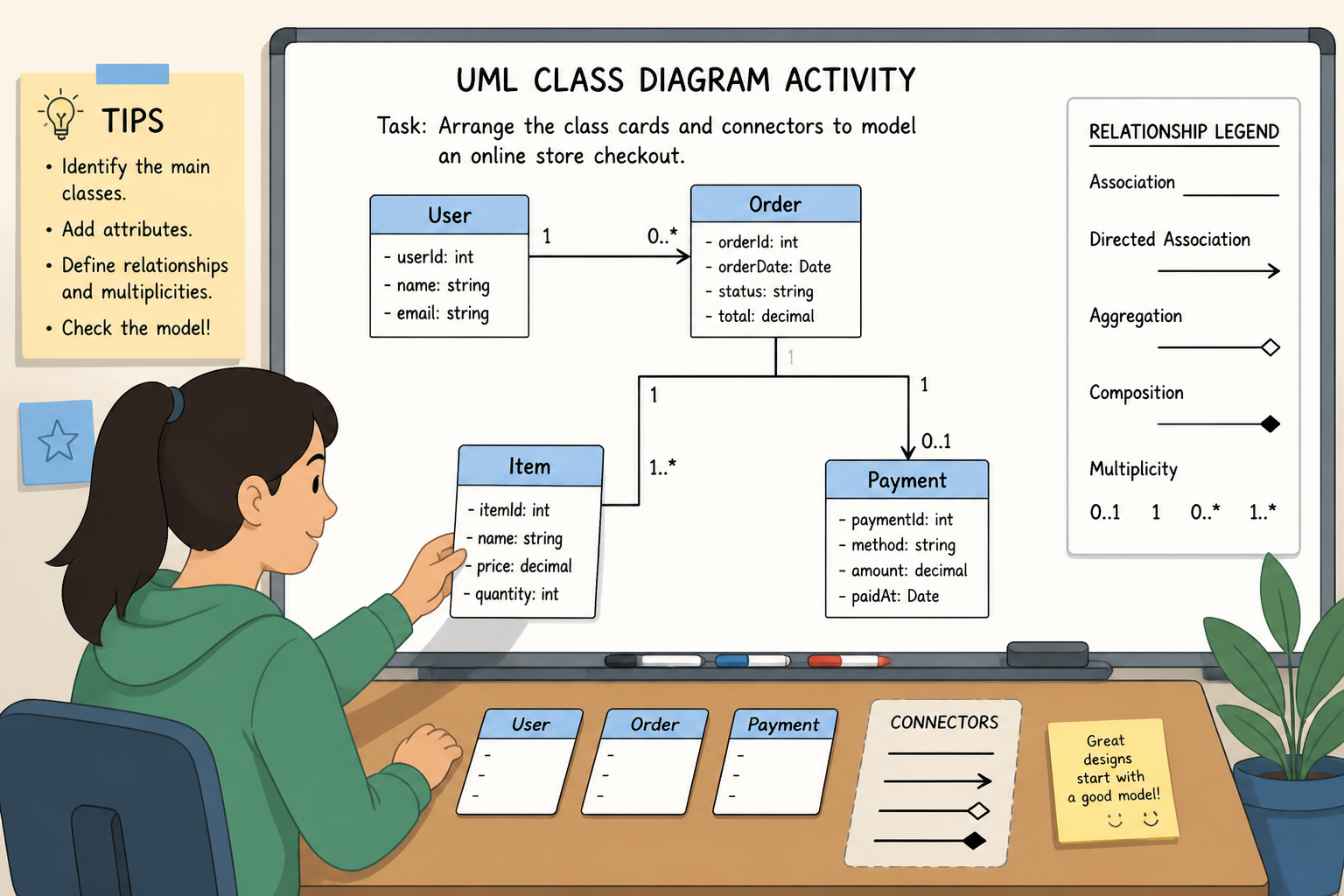
A quick sketch often exposes design gaps before implementation starts.
Rule set
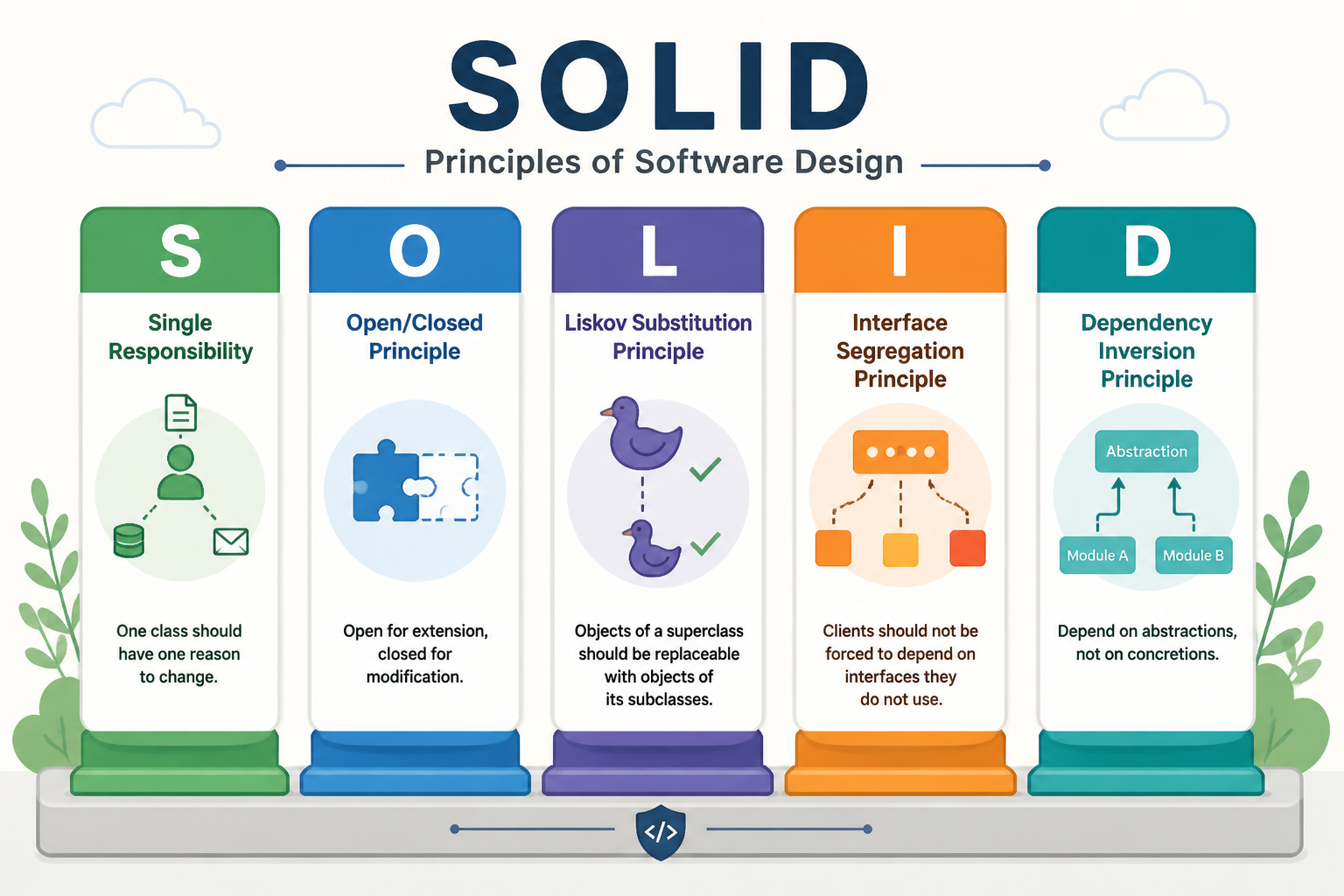
SOLID gives you practical guardrails
- S: one reason to change
- O: open for extension, closed for modification
- L: substitute safely
- I: small focused interfaces
- D: depend on abstractions
SOLID supports maintainable structure when your system grows.
Summary
Key Takeaways
- Review the core ideas.
- Connect concepts to practice.
- Prepare for assessment.
Assessment
Assessment Starting
You are about to begin the assessment. Select the best answer for each question.
Assessment Q1
Which statement best describes high cohesion?
Assessment Q2
Why is low coupling valuable in LLD?
Assessment Q3
What is the best first move when creating a class diagram?
Results
0%